CITY OF ÇANKIRI
Nowadays, the easiest way to escape the chaos of big cities is day trips. People in Ankara usually prefer Polatlı or Beypazarı for this. Very few consider getting on a bus to Çankırı. Yet this city, just 1.5 hours from the capital, offers plenty to see—from early Seljuk works to remarkably beautiful Ottoman houses, from mosques to a vast salt mine.
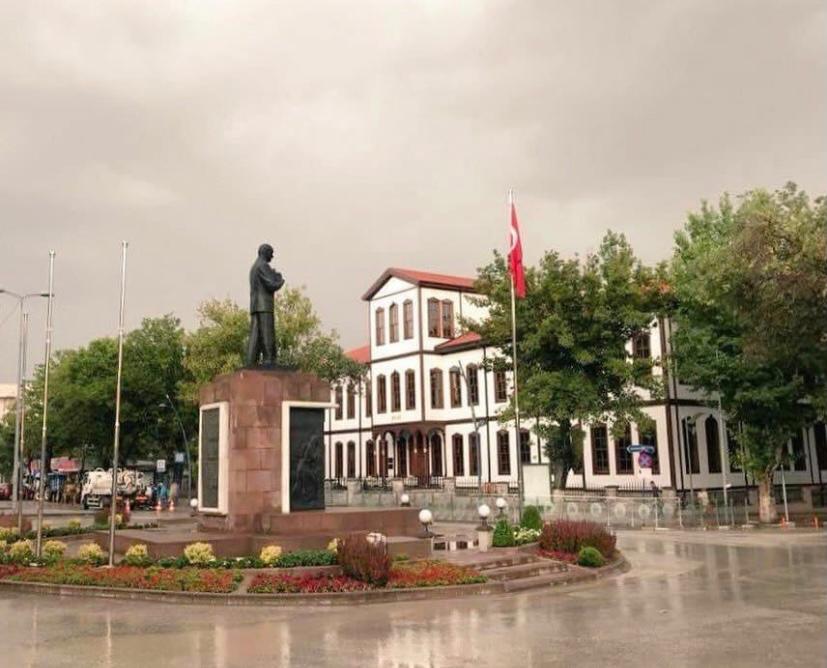
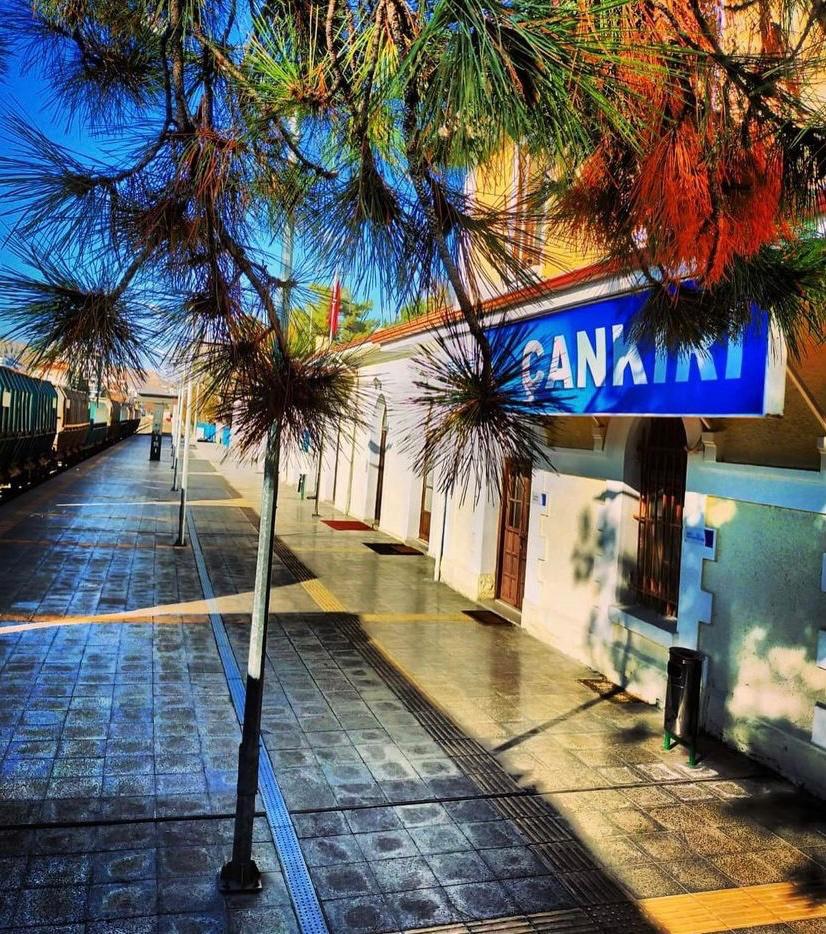
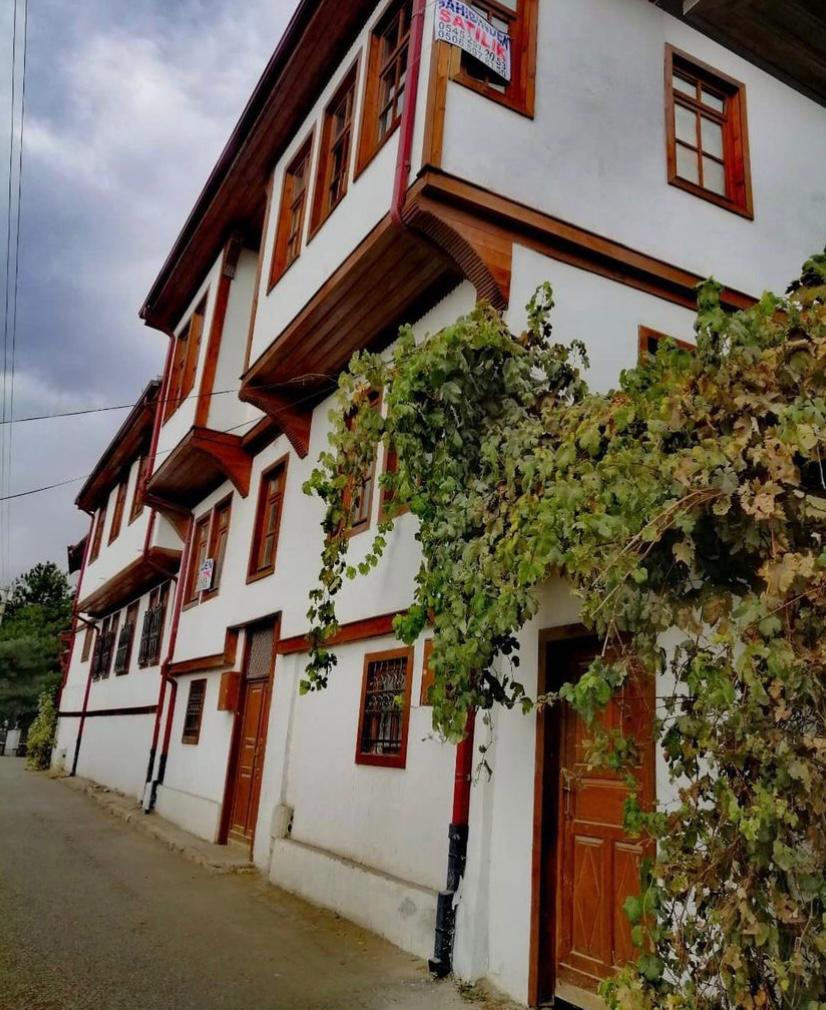
The usual rule applies here too; remember, first impressions can be misleading. Çankırı’s main avenue resembles a long valley filled with concrete. From the station, when you turn right toward the city center, you’ll come upon an Atatürk statue at the end of a plane-tree-lined street. This is the very heart of Çankırı. Directly opposite stands the Çankırı Museum. The building, used as the Government House since 1903, now serves as the Çankırı Museum. Here you’ll have the chance to explore the city’s history extending even before the Hittites. One of the most important artifacts from that era is a large red clay vase depicting a wedding ceremony. Since it was unearthed at the İnandık Tepe Mound, it is known as the “İnandık Vase.” The original is in the Museum of Anatolian Civilizations in Ankara, and a larger replica stands beside the bus terminal as a symbol of the city. The museum also houses glass bottles from the Roman era, displayed with wonderful lighting—witnesses to the days when Çankırı was known first as “Gangra” and later as “Germanicopolis.” After leaving the museum, head toward the Tatlıçay River. You’ll most likely arrive near Taş Mektep. Taş Mektep is an impressive stone building constructed in 1886. When Mustafa Kemal Atatürk came to the city to promote the “Hat Reform,” he stayed here. Today it serves as a Science and Art Center. Right across from Taş Mektep are old Ottoman houses standing side by side. One of these once functioned as a post office and library. Recently, one was restored as a “Yaran House” model. “Yaran Houses” are places where men gather to converse—similar to the “sıra gecesi” tradition in Şanlıurfa. Beginning at evening prayer and continuing until the morning call, a yaran night was organized not only for entertainment but also to discuss and debate various matters.
THE SPEAKING BEAUTIES OF SILENT LANDS: ÇANKIRI

The City’s Pride and Joy
Cross the river, head north, and turn left onto Taş Mescit Street. The road will take you to the oldest and most precious monument you’ll see in Çankırı. Taş Mescit was commissioned in 1235 by the Seljuk Sultan Alaeddin Keykubad. The original was built as part of a complex of structures financed, among others, by the city’s governor Cemalettin Feruh. As with all Seljuk buildings, the most striking element of the exterior decoration is the portal adorned with elegant carvings, reached by a double staircase; however, in the triangular space beneath the stairs there is an unusual carving depicting intertwined snakes. This figure, a symbol of medicine, likely originated from the hospital; the serpent coiled around a cup, accepted as the symbol of pharmacy, can be seen in the museum. The building later became a dervish lodge. Today, following restoration, it is planned to serve as a Hadith Research Center within Çankırı Karatekin University. Those with enough energy should head north toward the banks of the Tatlıçay and climb up to the remains of Çankırı Castle. Another option is to return to the city center and find the Great Mosque, also known as the Sultan Süleyman Mosque. It was built in 1558 during the reign of Süleyman the Magnificent by Sadık Kalfa, who worked with Mimar Sinan. Right next to it stands the very beautiful Çivitçioğlu Madrasa, built in 1754, which today hosts the municipality’s traditional arts courses. As you tour the area, you will likely come across the concrete-faced wooden clock tower, probably built in 1886. The tower was erected to mark the 25th anniversary of Sultan Abdülhamid II’s accession in 1901. Buğdaypazarı Madrasa stretches along one side of the courtyard in front of Buğdaypazarı Mosque—an arcade-lined, exquisitely elegant building. Just below the Great Mosque, as you descend past the İmaret Madrasa, you may encounter an unusual restoration project: the laundry house built in 1885 and used until 1980. It is known as the largest laundry under a single roof.
Turkey’s Largest Rock Salt Reserve
When you come to Çankırı, someone will surely mention the “Salt Cave.” To reach the cave by your own vehicle, you need to head east of the city, covering a pleasant 20-kilometer route through the countryside. When you arrive, you will be faced with one of the largest fissures on the planet. This is Turkey’s largest rock salt reserve and is thought to be old enough to have been used even by the Hittites. Thirty-six Early Bronze Age settlements and necropolis areas have been identified around the salt cave, 26 of which are registered. From the Hittites to the present, wide galleries have remained from the pillar system used to extract salt from the beds. With its high potential in terms of alternative tourism, the salt cave is aimed to be introduced to global health tourism. Just being here is captivating enough. The interior temperature is fixed at 15 degrees. One section is set aside as a small exhibition hall displaying works created by students of the city’s fine arts high school using salt rocks, an old carriage that once belonged to the mine’s owner, and the railway line that used to carry salt to the mine entrance. There is also a more curious object tasked with recalling the past: a donkey believed to have fallen into a well about 250 years ago and to have undergone a natural mummification process. Recently, a wild rabbit was placed in a box and set beside it to accompany it.
Add These to Your Itinerary
Ilgaz Mountain National Park: The park lies within the provinc